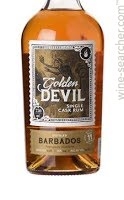
Golden Devil Barbados Foursquare Rum Distillery Aged 11 Years

Golden Devil Barbados Foursquare Rum Distillery Aged 11 Years rum review by the fat rum pirateGolden Devil Barbados Fourasquare Rum Distillery Aged 11 Years. Welcome all to the very first World Foursquare Rum Distillery Day (17th November 2019). An idea stemming from the creative mind of Richard Blesgraaf the spirits retailer, who also set up the Facebook group Foursquare Rum Appreciation Society.

I had originally intended to review one of the more recent official Foursquare Rum Distillery releases. Either Sagacity or Ple…..yeah the P one. Unfortunately they have not been officially released in the UK and I have been unable to source a sample in time.

So I had a bit of a hunt through the sample box and found a release from 2018 that I had forgotten all about. Those familiar with the website will have seen some of the Kill Devil Single Cask rum reviews I have done over the past few years. Kill Devil Rum is a brand which is owned by Independent Whisky Bottler Hunter Laing.

Kill Devil are another brand that have had to “re-brand” their line up in the US to avoid conflicting with existing brands. So any of these rums you may find in the US will be branded as Golden Devil. Unless someone has imported them direct from Europe.

For this particular Foursquare bottling the famous US Spirits Store K&L Wine Merchants have teamed up with Hunter Laing to release this 11 Year Old Foursquare rum.

Only 214 bottles of this rum were ever available (best of luck trying to find one). The rum was bottled at 62.5% ABV Cask Strength and is a blend of Pot and Column rum distilled in November 2006, blended and put into a single barrel. It retailed at $89.99. Which was not a bad price at all for a full 75cl bottle.

It is unclear how much tropical and continental ageing was at play with this rum as that has not been disclosed.

Presentation wise Hunter Laing have opted for a clear bottling for the Golden Devil releases, other than that it is pretty much as you find with the European releases. A nice chunky synthetic cork stopper tops off the presentation nicely. Berry Bros & Rudd The Classic Range Barbados Rum review by the fat rum pirate

Foursquare Rum Distillery’s reputation has really rocketed over the past few years. It started pretty much with the 2006 Velier collaboration which first got those outside the rum world buzzing about rum.

It has continued with a steady release of the Exceptional Cask Series and collaborations with Velier such as Triptych and Destino. Each rum offering something new and different. For both more hardened enthusiasts demanding Cask Strength rums and those easing gently into the world of unsweetened and unadulterated rum.

This bottling is/was for the more hardcore consumer.

In the glass we are presented with a pretty light coloured spirit. Just a shade or two darker than straw. Very “Golden” indeed! This might suggest more continental ageing than tropical but it also may indicate no caramel.

Nosed this is classic Foursquare. The rum has been aged in ex-bourbon casks only. No secondary maturation. So it’s fairly similar to the likes of 2004,2005 and 2007. At 62.5% ABV it is fairly boozy and a touch on the hot side. There are notes of coconut, banana and some woody spice. A touch of citrus zest and a fair hit of black pepper.

Sipped it is easier on the palate than the nose lead me to expect. It’s very tart though. A lot of lemon and lime zest, marmalade and some gooseberries. It has a fair amount of bitterness especially on the mid palate. I’m not getting a lot of the chocolate and nutty notes that I find with the ECS 2004, 2005 and 2007. Overall it’s a spicer, slightly less complex spirit.

Further sips see the rum calm down a little – the mid palate displays a touch more chocolate and a hint of raisin. The finish on this rum is a good length. It’s probably the best part of it. It has a lovely lingering spicy note and an almost orange chocolate note.Golden Devil Barbados Foursquare Rum Distillery Aged 11 Years rum review by the fat rum pirate

This rum does benefit from a drop or two of water. Just to round off its edges a little. This allows the more fruity notes – red grape, a touch of pear to show themselves.

This is probably a rum more for the completists. I wouldn’t recommend buying this over one of the distilleries own releases. There is no question this is a fine rum, but its not a game changer.

Chances are the option of buying this might not present itself. I was lucky to try this and thanks to Jon for getting me a sample.


Similar Posts

  • Gold of Mauritius – Dark Rum

    Gold of Mauritius Rum Review by the fat rum pirateGold of Mauritius quite a grandiose title and one which certainly sets this rum up as one that really needs to impress!  Mauritian rum has come to our attention before we have reviewed two Penny Blue expressions from the Medine Distillery.

    Gold of Mauritus offers a slightly different take on rum – but lets not say too much at this point.

    Gold of Mauritius is brought to the UK by the Trilogy Beverage Brand.  Who also also import brands such as Schin (Brazilian lager) and O’Hara’s (Irish Ale).  As well as importing Gold of Mauritius they also bring the newly released Mauritian Club Rum to our shores.


    Gold of Mauritius is blended and bottled by a Frederic Bestel.  Frederic buys in specific (but not named sadly) rums from various small distilleries on Mauritius such as La Bourdinaise (Bristol Classic Rum have bottled a couple of their rums).  These rums are unaged, Frederic then conditions the rums in (wait for it) South African Port Casks.  From what I gather the ageing process is around 12 to 15 months – so this is not a particularly long aged rum.  Caramel colouring is added to give consistency to each batch and it is felt by Frederic that the rum gets 80% of its profile from the Port Cask ageing.  It is noted here that Port Residue is still present in the casks.

    Gold of Mauritius has picked up a couple of awards a Silver at the World Spirits Awards and a Top Rum at an Indian Ocean Rum Competition.

    A bottle of Gold of Mauritius will set you back around £40-45 for a 70cl bottle with an ABV of 40%.  The rum is presented simply but elegantly.  I like the medium sized bottle and the presentation is classy, with a nice big cork stopper.

    In the glass Gold of Mauritius is more a dark brown than gold.  In the nose I’m hit by a young very sweet smelling spirit, alcohol fumes are present but not overpowering.  The rum smells sweet and the Port Cask “finish” is very apparent.  It also has a note which reminds me a little of English Harbour rums – a quite strong charred oak.  I’m also detecting sweet Cashew nuts.

    It’s really quite a nice nose all in all but not really anything (other than maybe the charred oak) that I would associate with rum.  In that aspect it remind me of Mount Gay’s Black Barrel rum – it has a slightly sweet/sour kind of bourbon hint to the nose.

    Gold of Mauritius Dark Rum Review by the fat rum pirateA tasting really does bring home the influence of the barrels used in the rums production.  The taste is predominantly a very deep char which gives a sweet and sour type mouthfeel – again very similar to a Bourbon Whiskey.  There is a sweetness running through it as well from the Port which gives it a slightly acidic red wine like note.  There are flashes in the mouth of dark chocolate and again like the nose some nuttiness.  As a sipper it is okay – it slightly rough and ready but it’s perhaps a little on the young side to really be seriously classed as a sipper.

    As a mixed drink it fairs slightly better – mixed with Cola it reminds me very much of Papa’s Pilar 24 Dark rum.  It has a lot of similarities to that rum in that it doesn’t really taste like rum at all!  I’m told it makes a great Rum Old Fashion.

    So where does this leave this rum.  Well being honest as a rum it ticks no boxes whatsoever.  It tastes pretty much like what it really is – a young unaged rum which has been basically masked with either wood chips or heavily charred barrels and port.  A flavoured rum if you like.  The sour mash Bourbon like notes I do actually quite enjoy and as a drink it isn’t bad as such.  But its not rum and not £40-45 worth of Premium Sipping rum.  Not by a long shot.

    If I was offered this in a blind tasting I wouldn’t even guess it was rum.  It’s interesting and unique (sort of) but its so far removed from rum that I can’t really score it very highly on the basis of a rum review and if I want Bourbon I can get Jim Beam for £15.  It reminds me a little of the slightly synthetic doctored feel of Lost Spirits Navy Rum.

    If you haven’t got aged rum don’t try and create it by nefarious methods its really quite insulting to rum drinkers.  The fact that is made using rums from smaller distilleries such as La Bourdinise should gain it kudos but when its been “masked” in such a way any goodwill quickly went!

    1 stars


  • Bristol Classic Rum Reserve Rum of Grenada Distilled in 2003

    Bristol Classic Rum Reserve Rum of Grenada Distilled in 2003 Rum review by the fat rum pirateBristol Classic Rum Reserve Rum of Grenada Distilled in 2003. It has been a long while since I have reviewed any of Bristol Classic Rum’s range. As far as I am aware they haven’t been all that active recently with new releases. This is a rum from the Westerhall Estate.

    It has also been quite a while since I reviewed any rum from Grenada. I think the last thing I did on Grenada was an interview with Mark Reynier about the Renegade Rum project.

    The rum was distilled way back in 2003, this was before Hurricane Ivan destroyed much of the Westerhall Estate. One of the reasons why they now blend rums from Angostura, rather than produce rum from scratch.

    Bristol Classic Rum Reserve Rum of Grenada, was produced on a column still. I am unsure of the number of bottles of this rum, that were available. The rum was aged mostly in the UK, in ex-bourbon barrels (so this must ‘t be a single cask release). It has been bottled at 43% ABV in 2014. You can still find bottles of this rum online, if you have a bit hunt around. The price may vary from around £60 to around £75. I think I paid around the £60 mark, a few years back.

    Presentation wise, it comes in the standard stubby Bristol bottle, with a foil covered plastic topped synthetic cork stopper. The colour scheme for this is in keeping with the national colours of Grenada. The back label is a little hard on the eyes, to be honest. I quite like the fact they have used the very vibrant Red, Yellow and Green of Grenada overall though. It’s a nice touch There is a slight DIY element to the BBristol Classic Rum Reserve Rum of Grenada Distilled in 2003 Rum review by the fat rum pirateristol presentation that I have always quite liked.

    Bristol Classic rum were one of the first Independent Bottlers I gravitated to on my rum journey. They have in recent years been criticised for not releasing more rum as Cask Strength or higher ABV than 46%. John Barrett who heads up Bristol Classic Rum is a very knowledgeable man in the wine and spirits world. As a result I have always trusted his judgement. He prefers to release his rum at what he sees as drinking strength.

    In the glass we have a light golden brown spirit. The nose is very light but not at all unpleasant. Buttery shortcrust pastry, shortbread, icing sugar and some light toffee. This is overlaid with a slightly damp musty oak and some light ginger. A touch of all spice and some slight acidity.

    It’s not a huge rum but it has enough complexity on the nose to suggest that the sipping experience will not be entirely unpleasant.

    On the sip it is actually a lot more woody than I was expecting and much less sweet than the nose had suggested. It’s a very clean tasting spirit. Very dry on the palate. The initial sip doesn’t have any of the buttery sweetness I was expecting and the mid palate quickly moves into some bitter dry oak, ginger and a slight touch of toffee but it’s barely noticeable.

    Finish wise it doesn’t really evolve much beyond the mid palate and it all just kind of fades away. You are left with some light oak and some traces of ginger. Overall it is just a bit too light.

    It would be easy to blame the ABV. To be honest I still get enough of a kick from 40-46% ABV spirits. Especially, when it is the first spirit I have tried on an evening.

    Despite Bristol Classic Rum Reserve Rum of Grenada Distilled in 2003 Rum review by the fat rum pirateall the negativity around this rum – it’s actually not all bad. It has no additives as per the Hydrometer and it doesn’t really have any “bad” or “off” notes. What is there is pleasant enough. There just isn’t a great deal going on.

    It is after all a column distilled rum which would likely usually be used in other rum blends. It’s been mostly continentally aged in ex-bourbon barrels. So it was unlikely to ever be anything particularly ground breaking.

    From my point of view it was nice to try something a little different from Grenada. I’ve actually been lucky enough to source some of the Rivers Royale Grenadian Rum so it will be interesting to see how that 69% ABV monster compares to this.

    I can’t imagine it being very similar!


  • Is Continental European Aged Rum better than Tropically Aged Rum?

    In February this year Alexandre Gabriel, owner of Maison Ferrand, the producers of Plantation rum gave an interview to David Driscoll of K&L Wine Merchants. A popular Wine and Spirits retailer based in the US.

    Over the past few years, Alexandre and more specifically Plantation rum have been held up by many as the “poster boys” for adulterated rum. This is partly due to the fact that until very recently ALL their rums had what Alexandre refers to as “dosage”. The reality is, that whilst Plantation do add sugar (an aged sugar syrup), they don’t usually add the huge amounts favoured by some other “Premium” rum producers. Nor as far as I am aware, do they add things such as Glycerin or essences.

    Some claim Plantation are “transparent” over the issue. This isn’t 100% true either. They still don’t disclose the “dosage” on their bottles. They do let people know though. Particularly in industry focused presentations. I have attended such events and seen, for example Paul McFadyen, at work explaining the “dosage” process.  I have also seen them doing so without being prompted at Rum Festivals. I have also just been advised that they are disclosing dosage now on their website. It will be interesting to see how these results compare to those conducted by amateurs such as Johnny Drejer and myself.

    For the purposes of this article, I am not interested in the “added sugar” issue. I have written about this at great length in the past. I have little to add to what I have already said. Instead, I wish to focus on a topic, which a number of people have asked me to write about in more detail – ageing. More specifically ageing in two very different climates.

    In the interview I referred to earlier, Alexandre makes a few statements which have led to him receiving a certain amount of ridicule on Social Media. From speaking with numerous people within the Rum Industry, it is felt that Alexandre has been “poked and prodded” for quite some time. Particularly over the “dosage” issue. Some of the interview may have been Alexandre having a “pop” back at certain critics. In all honesty I do have some sympathy for him. I certainly do not blame him for doing so if this is the case.  If you wish to read the interview it is here. Please form your own opinions on the interview. I have my own but do not let that influence your perception of what is said.

    I feel that Alexandre may regret saying that producers in the Caribbean think “aging means putting a spirit in a barrel and then coming back five years later, hoping it’s all well and good” for example. One can understand why he has caused so much upset, especially amongst the Caribbean producers.

    In the interview Alexandre suggested that he has improved Caribbean rum, by bringing it over to Europe. He talks a lot about “dosage” but also about “elevage”. Elevage focuses on making a spirit the best it can be – by carefully managing how it is matured. How it is aged and what it is aged in.

    I wish to focus on WHERE rum is aged. And no, I don’t mean in a barrel. I mean Geographically. So lets focus on the debate surrounding Tropical and Continental ageing. Is Continental European Ageing better than Tropical Ageing? Can Alexandre Gabriel and Plantation really produce better rums than his Caribbean counterparts?

    In an earlier article regarding Independent bottlers I did touch upon Continental European and Tropical ageing. In order to expand upon this I have asked a number of people in the industry for their views and opinions. As a result some of the information you may read in this article you may query. It may not tally with exactly what you have been told in the past. Especially by producers or brands. Some of those I spoke with have asked not to be named. First up, we will look at one of the myths regarding Continental European Aged rums.

    To make things clear, by Continental European Ageing we are focusing on those rums bought by brokers and then aged in Europe. It is mostly Europe where bulk rum ends up when it is exported from the Caribbean. Tropical Ageing is when the rum is aged, usually at source in the Caribbean in a Tropical Climate.

    I say usually because rum is moved from the distillery to another location. Some of Velier’s Caroni stock was moved from Trinidad to Guyana to be aged at Demerara Distillers Ltimited. The likes of Gosling’s Black Seal rum is aged tropically but the rums in the Black Seal blend are not distilled on Bermuda. They are imported from other Caribbean islands. Same is now the case at Westerhall Estate on Grenada. They import, age and blend Angostura rum from Trinidad.

    Continental Ageing versus Tropical Ageing Article by the fat rum pirateIndependent Bottlers

    Many Independent Bottlers make claims that they actively source rums from Caribbean Islands. Painting great stories which envoke visions of them searching through Caribbean distilleries dusty rum cellars uncovering previously untouched stocks of rare unqiue rums. Tasting and sampling until they find the exact barrel that their highly evolved palate was seeking all along.

    In 99% of cases this is utter poppy-cock. Whilst no-one is doubting that a lot of these bottlers will visit the Caribbean, the idea that barrels are just waiting to be discovered and sold to the highest bidder are nonsensical. Caribbean rum producers are sitting with stocks of rum that they simply do not know what to do with? That is the kind of arrogance that really annoys the likes of Richard Seale of Foursquare.

    The truth is the vast majority of Independently bottled rum is sourced through third party brokers such as E.A Scheer. The Independents buy from Scheer based on samples they are either sent or from visiting in person. They do not spend their time in dusty Caribbean warehouses looking for that perfect barrel. It is patronising to suggest the Caribbean rum producers wouldn’t be able to identify their own quality aged stock.

    Think about it from an economical point of view how feasible is it to have individual barrels transported to destinations all over Europe from the Caribbean? What is feasible is that most Caribbean Distilleries rely on sales of what they call “bulk rum”.

    That isn’t just “feasible” it is actually what happens!

    Bulk Rum

    Each distillery has a maximum production level or rather an optimal production level per year. Much like most factories – think shift working in order to maximise efiicency. They can produce X amount of gallons/litres of rum in order to run efficiently. Even famed producers such as Foursquare and Worthy Park, do not currently have sufficient demand to enable them to run their distillery to optimum efficiency and blend and bottle ALL their rum for the retail market.

    As a result most distilleries rely on selling “bulk rum”. In the case of places like Clarendon/Monymusk Distillery in Jamaica this can involve selling rum to be used in anything from perfume to Captain Morgan. Some would suggest those two aren’t that far apart……

    It is this sale of “bulk rum” which has enabled Independent bottlers to amass large quantities of rum. They can then purchase and age the rum in Europe – often in Scotland or Liverpool,England.

    Richard Seale of Foursquare whilst reliant to some extent on “bulk rum” sales, really doesn’t like the fact that old time “colonies” are still in the situation of needing to supplement their income by effectively giving away some of their precious rum stocks.

    Distilleries such as Hampden in Jamaica, have until recently never aged any rum on site. They have not had their own brand of rums either. Most of their product was sold in bulk to Europe. In recent years this has changed. They now have their own brands – Rum Fire and Hampden Gold and are ageing more product on site before either releasing it in conjunction with Velier or selling it as aged bulk rum. They have released their first ever “aged” rum under their own Hampden brand in just the last couple of weeks.

    It is interesting that distilleries such as Worthy Park, Foursquare and Hampden Estate are releasing rums under the distillery name rather than a “brand”. This has caused some conflict with Independent bottlers as they also use the distillery name on their bottlings. At the moment efforts are ongoing to make sure the Independent bottlers name is more prominent on such releases, than the distillery. To prevent any possible confusion.

    Richard Seale and Zan Kong of Worthy Park are particularly concerned about confusion between “official” distillery releases and Independent bottlings.

    Is Continental European Aged Rum better than Tropically Aged Rum? article by the fat rum pirateContinental/Tropical Aged Rum

    As more Caribbean producers age their own rum on site it gives them further opportunities. They can still sell “bulk rum” which has been aged. Such rum can then be further aged in a Continental climate. This creates a mix of Continental and Tropically aged rum. You may notice going forward brands such as Transcontinental Rum Line denoting a percentage of Tropical and Continental ageing to releases.

    Though this is not common so often the consumer will not know the full story of where their rum has been aged.

    Climate/Terroir

    In terms of the climate it is reasonable to say that the Tropical climate is warmer than the European “Continental” Climate. I’m pretty sure its sunnier a lot more often in Kingston than it is in Liverpool.

    However, some parts of Europe are much warmer than others. Rums aged in the likes of Madeira (an Portuguese island) may age a lot differently to those in Scotland. They may age in a more similar manner to those in the Tropics. Some Spanish Islands such as the Canary Islands are not to far from Africa so the climate is pretty pleasant.

    It should also be taken into account the huge differences in temperature that can be found in the Tropics. Such changes will cause a lot of activity in the barrel. Not to mention the evaporation of spirit that is accelerated in the Tropics….

    We should also consider the role of “Terroir”. Terroir is basically the exact geographical location where the rum is produced. When people talk of terroir they talk about everything that might effect the Sugar Cane or Molasses. When people discuss Terroir they reference the soil the sugar cane is grown in, the distilleries/can fields  proximity to things such as volcanoes, altitude, strain of sugar cane etc. Usually Terroir goes into the minutia of information which may influence the final distilled product.

    I am a little skeptical of this to be honest – I do accept that these things will influence the final product but I am not sure how much of an impact it might have. Tropical rum producers have been using imported molasses for a number of years after all.

    Is Continental European Aged Rum better than Tropically Aged Rum? article by the fat rum pirateAngels Share

    I think there is a belief that rums aged in the Tropics have a richer more concentrated flavour to them, perhaps due to the excessive evaporation of the spirit in such a climate. Whilst again it is not a strict science, evaporation due to what is termed “The Angels Share” in the Tropics can be around 6% per year on average compared to around 2% in a Continental climate. Having said that these figures shouldn’t be regarded as gospel.

    As a result it is felt that a Tropical Climate will produce a more concentrated, richer spirit. Often the perception is that a rum aged in the Tropics will be darker in colour. Continentally European aged spirits being lighter – more akin to many Whiskies.

    Again like The Angel’s Share this is not an exact science but my observations are that if a rum has not been coloured and is aged in Continental Europe, it will be lighter than the same spirit aged in the tropics.

    Pricing

    Another discussion around Continental European and Tropical Aged rum is the price differences. As touched upon already, The Angels Share does impact Tropically Aged rum more than Continentally Aged rum. Once you have a barrel of rum you will expect to get more bottles out of a Continentally aged rum in 5 years time than you would Tropically Aged rum.

    There is a lot of information around which supports this. So price is something that tropical producers often get criticised for. People query why they can get 25 Year Old Demerara Rum from Cadenhead’s for £100 yet Velier what the same money for a 6 year old.

    The Habitation Velier line up came across such objections due to the relatively young age of some of the rums on offer. Criticism of such pricing has subsided now people have actually tasted the rums on offer.

    On the other side of the coin some of the Caribbean Rum producers feel that their European counterparts charge too much for some of their bottlings – especially when they dilute them down to 43-36% ABV.

    Age

    Most Independent bottlers do not denote how much time their rums have spent in the tropics. In some instances this can be as much to 10 years. So a 11-year-old rum sold by a UK Independent bottler may be almost entirely aged in the tropics aside from the final year. Likewise a 25-year-old bottling may have spent no time aged in the Tropics it may have been bought “unaged” from the broker and aged solely in Europe.

    With most bottlings it is very difficult to determine this as the information simply isn’t provided.

    Bristol Classic Rum Enmore Still 1988 rum review by the fat rum pirateThe mention of 25-year-old rums is also another point for the discussion. You could try to bottle a 25-year-old Tropically aged product but you are in serious danger of finding yourself with very little rum left in each cask. It is no coincidence that rums produced on a commercial basis from the likes of Appleton Estate, Foursquare and St Lucia Distillers rarely go beyond the 12-year-old mark.

    Whilst Appleton Estate’s 21-year-old and Appleton Joy releases are composed from very old tropical stocks they are much more limited in numbers. Limited when compared to the likes of their own Signature Blend or even their 12 Year Old.

    I have not seen a release from Foursquare Rum Distillery which has exceeded 12 years. Even amongst their Exceptional Cask Series and Velier collaborations.

    St Lucia Distillers aged 1931 series also focused around the low teens in terms of overall age.

    However, Independent Continental bottlers regularly releases rums from the likes of Hampden, Foursquare and in particular Demerara Distillers Limited with 20 year plus age statements.

    Casks/Barrels

    Once bulk rum is sold it is very much up to the buyer to find the appropriate casks in which to age the spirit. Often the bulk rum is supplied in Stainless Steel Vat’s. It is then down to the bottler to re-cask and age the rum.

    I have had a few Independent bottlings where unless the distillate originally supplied was a shockingly out-of-place example of that distilleries usual output – it has clearly been aged in what I have termed as a “knackered” barrel. By that I mean one which has been used and re-used. To the point where it is either so badly charred or has had so much spirit in it in the past, it is now just giving a nasty, bitter edge to the distillate. Leaving it completely ruined..

    Likewise I have had a few experimental finishes, which have either made next to no difference to the distillate. This is noticeable when compared to a standard release. More worryingly some have completely ruined the rum.

    Conclusion

    It would take a very brave man with a lot more experience than me to proclaim one form of ageing over another. There are so many grey areas. It is almost impossible to effectively evaluate any rum based solely on where it has been aged. Even if we were given full details of a rums full “movements”. I think we would still make “mistakes” when buying Independent bottlings. Again, I have touched on this in the past with my article on Independent bottlings.

    Cadenheads MPM DIamond Distillery 14 Years Old Rum Review by the fat rum pirateI do not think either side of the discussion should proclaim to be better than the other. I think rather than try to do another producer down, with regard where rum is aged producers would be better placed to explain to the consumer exactly why their rum is top quality. More information on the labels would be great – I am not just talking about labelling “dosage”. Information as provided by Transcontinental Rum Line stating the % where a rum has been aged is a step forward. Complete transparency of a rum’s history would be great. I believe any Independent bottler that attempted this would immediately attract customers to their brand.

    Personally I do look to see if a rum is Tropically Aged and it does often influence my final purchase. That said I make a lot of very questionable purchases that even I can’t quite explain.


  • Novo Fogo Silver Cachaca

    Novo Fogo Silver Cachaca rum review by the fat rum pirateNovo Fogo Silver Cachaca. As I continue my journey into the world of cachaca I am encountering a few cachaca brands which are more geared for the export market, rather than the huge domestic market in Brasil.

    One such brand is Novo Fogo. I have previously reviewed a couple of their expressions a Barrel Aged cachaca and  their Tanager blend. Both were pretty good. So having taken some time out to sort out my samples boxes into some kind of order I dug into my cachaca box and came out with Novo Fogo Silver. So we’ll give it a spin today.

    Unlike most cachaca brands in the US and Europe Novo Fogo do actually own their own distillery in Morretes, Parana state and they work closely with two other distilleries in Parana, who provide cachaca for their blends.

    Novo Fogo Silver Cachaca is the base spirit for all of Novo Fogo’s range. It is produced from organic hand harvested estate sugar cane, which is harvested and pressed within 24 hours. The sugar cane juice is then fermented for 24 hours which produces a sugar cane wine of around 7%-8% ABV, which is then used for the distillation.

    Novo Fogo Silver Cachaca is 100% Pot Distilled in small batches the still used has a capacity of 1200 litres. Only the heart of the distillation is used for the cachaca (as is normal) but the head and tails are used to produce sanitiser, which is used to help clean the facility and fuel which is used to power employees cars and the vehicles used at the distillery such as tractors.

    The heart of the distillation, around 120 litres comes off the still at around 48% ABV on average. This is then stored in stainless steel tanks. It is then slowly blended with local spring water to bring the ABV down to 40% ABV.

    Novo Fogo can be found quite easily in the US and also has pretty decent availability here in the UK and Europe. Novo Fogo Silver Cachaca is currently available at The Whisky Exchange. It retails at £29.95 for a 70cl bottle. The ABV as mentioned earlier is 40%.

    Novo Fogo have a very strong and very modern branding. The “shapely” rNovo Fogo Silver Cachaca rum review by the fat rum pirateounded bottles are really nice and the overall design is clean and very much on trend. As you would expect from such a strong modern brand they have their own website. Which is very informative and well worth a visit.

    So I think we have pretty much covered everything I can think of. So why don’t we give this a whirl?

    Oh just a quick note if you are in the US you can also pick up a handy 50ml miniature complete with a kit so you can make your own Caiprinha. Which I think is a nifty idea.

    So in the glass we have a crystal clear spirit.

    Nosing Novo Fogo Silver Cachaca I am immediately in very familiar white unaged cachaca territory. Which is reassuring.

    The nose is pretty punchy you can certainly nose this from a distance. For those unfamiliar with white cachaca they often nose a little like a slightly less boozy Wray and Nephew OP and a rhum agricole combined. Often cachaca is bottled at 38% ABV so this is just above the often more conventional ABV.

    It’s quite zesty and pretty pungent. Grassy and milky aromas jump out at you but they are carried by a very clean citrus punch which adds a nice balance and extra layer to the nose. You can tell from the nose this is a punchy and well defined cachaca. It will not go missing in mixed drinks.

    As a sipper, it is surprisingly floral and has quite “mineral” like note. It  actually has a really nice layer of complexity. Spicy notes of ginger and cardamon. A nice kick as you swallow. It is clean and quite dry on the palate.

    It is very refreshing and works well as a palate cleanser. Novo Fogo Silver Cachaca leaves behind a nice fresh almost lemon note in the mouth. Finish wise it isn’t particular long but it is a drink worth holding in your mouth for a few seconds as it has a nice honeyed sweetness which works wonderfully with the citrus and spice notes.Novo Fogo Silver Cachaca rum review by the fat rum pirate

    As a mixer Novo Fogo Silver Cachaca works wonderfully in “lighter” cocktails such as the Caiprinha and in a Mojito. It doesn’t fair all that well when mixed with coke – to be fair it’s not really the best way to approach cachaca.

    This is a very good cachaca and it is available at a very fair price. I can’t immediately think of any white cachaca that I would rate above this in terms of quality, price and availability. It’s certainly better then Abelha and Ben Bom, for sure.

    Reviews of this have been very positive online. I found this review from Lance at The Lone Caner as the one review from a dedicated rum/cachaca reviewer. He also enjoyed this.

    Excellent stuff a really well put together and well balanced spirit.


  • Ron Coloma 8 Anos

    Ron Coloma 8 Anos Rum Review by the fat rum pirateRon Coloma 8 Anos. Ron Coloma are a rum brand from Colombia. They currently have two rums in their portfolio. Today, I am reviewing their 8 Year Old Rum but they also have an older 15 Year Old Rum.

    Ron Coloma, hails from the Hacienda Coloma a Coffee Plantation in Fusagasuga, Central Colombia. Both the rum brand and the Hacienda Coloma have their own websites here and here. There are some interesting links to the likes of Parce Rum on the Hacienda’s website.

    It is unclear where exactly this rum is produced. There are a lot of rumours circulating, which suggest a lot of what is noted as “Colombian” Rum is actually rum from Panama or Costa Rica. Which just happen to border Colombia.

    The production method of distillation is not noted either. I will take it though that this rum was produced on a continuous column still. The “information” available via the Ron Coloma website is as follows

    “The rum masters Sandra Reateguí and Judith Ramirez, conceived this rum
    distilled from pure cane molasses, of continuous aging in
    American oak barrels – previous use in Bourbon  and with a finish (final aging)
    in barrels used for the rest of the recognized Coloma coffee liqueur.

    Hydrated with water from the Cordillera de los Andes, and filtered in old
    coffee filters at Hacienda Coloma, the softness and balance
    of Ron Coloma are a charming reflection of its origins.”

    What a lovely Fairy Tale. I guess it’s going to be left to me to fill in a few actual facts about the juice in the pretty bottle.

    The secondary method of ageing may go some way to explain why the Hydrometer Ron Coloma 8 Anos Rum Review by the fat rum piraterecorded around  19g/L of additives with this particular “ron”. I also Googled the two Master Ronero’s noted and it did not return anything other than Ron Coloma. Do we have Colombia’s version of Don Pancho?

    Presentation wise we get a nice short necked square 3/4 size bottle. It’s sleek and very “Premium”. You also get a sturdy cardboard box to store the rum. Ron Coloma 8 Anos is topped with a synthetic cork stopper. In the UK a bottle will set you back around £40 or just a little under it is currently in stock at Amazon and Master of Malt were stocking it but have sold out.

    You also may be able to find it in a presentation box with two Coloma branded glasses (as pictured above).

    So, in the absence of any furher information regarding this rum lets move on see how this latest “ron” fares……..

    In the glass we have a dark to golden brown coloured spirit. Nosing Ron Coloma 8 Anos you are immediately hit by sweetness. An almost cloying array of caramel, toffee and clove. There’s a slightly saccharin like note, as well.

    Further nosing reveals a few hints of oak and touch of spice. Not a great lot though. There is a slight trace of “spirit” but it does seems all just a bit too sweet and artificial. There is some coffee there from the secondary ageing but it is nowhere near the dominant note of this particular nose. We aren’t in Dictador land thankfully.

    There’s a slightly “off” note about the whole thing it smells a little sour to be honest. Definitely not a very good nose. It all smells a little forced and contrived.

    Sipped, sadly it fails to improve. It’s flat and one dimensional. It has a horrid saccharin after taste and little else. Maybe a touch of a very bad coffee, like flavour. Hickory like amost – yack. The entry is as sweet as the nose but once the toffee and caramel subside you get a very synthetic mid palate. Lots of saccharin which is quite bitter and unpleasant.

    It’s very easy to drink – aside from the horrendous bitter aftertaste. Sipped it goes down easily enough, as it has next to no burn. No body at all really. No doubt due to the Ron Coloma 8 Anos Rum Review by the fat rum pirateadditives involved in the post distillation. I don’t believe this is getting its flavour solely from being aged in an ex Coffee Liqueur barrel – the taste is too false. If it is then that Coffee Liqueur, must be pretty rank.

    It’s got something of a finish and a slight burn with a little bit of ginger and some cinnamon. Sadly it doesn’t really last very long and all you are left with is a very bitter nasty synthetic mess in your mouth.

    This is seriously, a very boring, flat, uninspired spirit. I didn’t expect this to be quite as boring as this. I was hoping it might be a bit more like La Hechicera than Dictador. Sadly that’s simply not the case.

    Completely forgettable in many ways but pretty rancid nonetheless.

    1 star

  • Comandante Fidel Ron Anejo del Caribe

    Comandante Fidel Ron Anejo del Caribe rum review by the fat rum pirateComandante Fidel Ron Anejo del Caribe. Spain is quite an interesting place to visit when you are on the search for rum. First up it’s cheap as chips compared to the UK, sadly though they do seem to prefer (funnily enough) the Spanish style of rum. So you are faced with an endless supply of Cuban, Venezuelan and Guatemalan rum.

    To be honest I’m mostly in the British resorts when I am in Spain. So we are talking about the likes of Benidorm, Salou and Torremolinos. In terms of islands it will be Mallorca or Tenerife. So perhaps the available rums aren’t the best representation.

    However, Comandante Fidel Ron Anejo del Caribe seems to be pretty well distributed as I have seen it in a few resorts including Barcelona. I finally decided to get a bottle as I was leaving Salou, earlier this year.

    To be honest it was dirt cheap €7.90 for a 70cl bottle, which unsurprisingly comes in at the bare minimum for a rum 37.5% ABV. Standard practice for “domestic” spirits in the UK so no big deal.

    Comandante Fidel Ron Anejo del Caribe is a rum which is not identified as being from any particular place in the Caribbean. I guess the fact Fidel Castro suggests at least some of the rum in this bottle is possible from Cuba. Then again this is the rum world so maybe not………maybe a mix of Cuban an cheap Trini rum.

    Beyond this I have little information on the rum. The label is in Spanish an I doubt it will fill in many of tComandante Fidel Ron Anejo del Caribe rum review by the fat rum piratehe blanks anyway, even if I do a translation. The bottle is a 3/4 stubby style affair with a rounder base and a short neck. The neck has a diffuser in the bottle to prevent any other rum being poured into this as a cheaper replacement. It is imported into Spain and I’ve not seen it anywhere else.

    In the glass we are presented with a straw coloured rum. It’s light and doesn’t appear to have been coloured. The hydrometer also agrees with the ABV coming in at between 37 and 38% ABV, when tested. I won’t get involved in the politics of this rum or the choice of person used to promote it. So we’ll just move along and see how it tastes.

    Taken neat this is best described as entirely lacking any merit whatsoever. It tastes like an ash tray that has had warm lager spilled into it. With maybe a shot of vodka added for a bit of a kick. It’s repulsive. Huge, sickly flavours of sweet cheap nasty cigarettes.

    It’s thin and boozy and just completely disgusting. Raw, smoky. unbalanced and just down right awful. Easily one of the worst undosed rums I have ever tried. It’s bitter and almost tastes like Marajuana smells. Urgh, its truly repulsive muck. No matter how cheap this foul tobacco water is do not buy it.I’d buy anything over this even cheap Tequila doesn’t taste this bad.

    Comandante Fidel Ron Anejo del Caribe rum review by the fat rum pirateTo be fair I wasn’t expecting a sipper but even as a mixer this is god damn awful stuff. Unlike a lot of rums the flavours and aromas when sipped, do not disappear. In fact they almost become more pronounced when mixed with cola. Making for an absolutely disgusting rum and cola. I’m not exaggerating, unless you enjoy chewing tobacco I doubt you will get any enjoyment out of this rubbish.

    Avoid no matter how cheap it is – even if they are giving this away. The novelty value is not enough to rescue this nonsense.