
Geographic Indications (GIs) : Guyana Geographic Indication (GI) for Demerara Rum

Geographic Indications (GIs) : Guyana Geographic Indication (GI) for Demerara Rum
Geographic Indications are not always tied to agricultural purity or strict terroir rules. Some exist to protect a historic production identity. Some exist to defend a national brand.
Some exist because a single producer has a heritage so distinctive that the law eventually bends around it.
Guyana is the perfect example. Its Geographic Indication for Demerara Rum is a modern defensive framework built around a single producer with a unique collection of heritage stills and a long history of coastal rum production.
This chapter examines the Guyana Geographic Indication GI for Demerara Rum. It is a rare case where a GI is designed not to regulate dozens of producers but to protect the legacy of one.
It is both pragmatic and deeply rooted in the industrial and historical reality of the Demerara region.
Guyana Geographic Indication GI for Demerara Rum The Rules
Geographic Scope
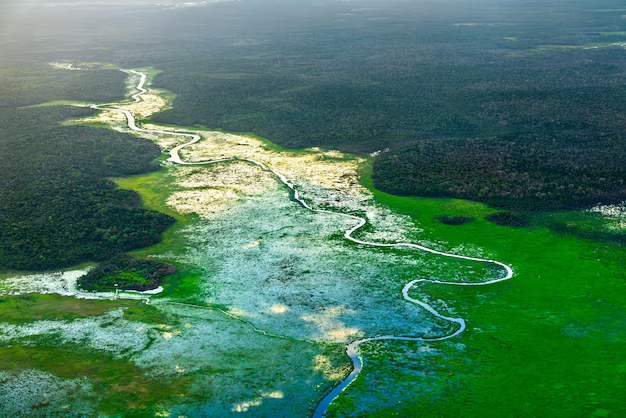
The GI is strictly confined to the low coastal plains of the Demerara region between the Boeraserie River on the west and the Abary Creek on the east.
Fermentation and distillation must occur exclusively within this defined territory.
Raw Materials
The GI does not require the sugarcane source material to be grown locally. The focus is placed on the distillation and production processes rather than the origin of the molasses.
Fermentation
The regulations mandate the use of the yeast strain Saccharomyces cerevisiae propagated using groundwater sourced from local artesian wells.
Fermentation is maintained at approximately thirty two degrees Celsius to yield a wash typically between six and eight percent alcohol by volume.
Distillation
The framework categorises rum by congener levels into light medium and heavy bodied designations. Light and medium styles are produced in continuous multi column stills.

Heavy styles rely on the heritage wooden pot and wooden column stills which are unique to the Demerara region.
There is no upper or lower limit on distillation strength provided the spirit maintains its organoleptic character.
Water
The dilution of rum for blending must be carried out using deionised Demerara artesian well water.
This requirement is critical for the Cask Aged Special Reserve and Grand Special Reserve categories as the specific mineral profile of the local water is considered integral to the flavour development of the finished spirit.
Maturation
The GI establishes clear age categories.
Old Demerara Rum requires a minimum of two years. Cask
Aged Demerara Rum requires three years.
Special Reserve requires twelve years.
Grand Special Reserve requires at least twenty five years.
For these premium categories blending and bottling must occur within the GI region to preserve the integrity of the water and maturation environment.
Additives

The framework aligns with EU spirit regulations. No artificial flavourings are permitted. The rum can be sweetened to round off the final taste but this is capped at a maximum of twenty grams per litre.
Caramel colouring is permitted only for consistency and must be derived from sugars.
What the GI Protects
The historic Demerara identity
The exclusive use of the heritage wooden stills Local blending and bottling for high end aged categories
Defined age categories
Congener based style classifications
What the GI Does Not Protect
Local agricultural sourcing of molasses
Strict agricultural controls
Transgenic cane restrictions
A French style terroir model
Summary/Key Takeaways
The Guyana GI is a pragmatic and highly effective piece of defensive legislation. It secures the legacy of the Demerara name and ensures that the vital blending and maturation stages remain under local control.
By setting clear standards for age statements and congener levels it prevents the dilution of the Demerara brand while acknowledging the industrial realities of modern rum production.