
Everything You Know About Don Papa Is a Lie: The Secret Bottle Swap
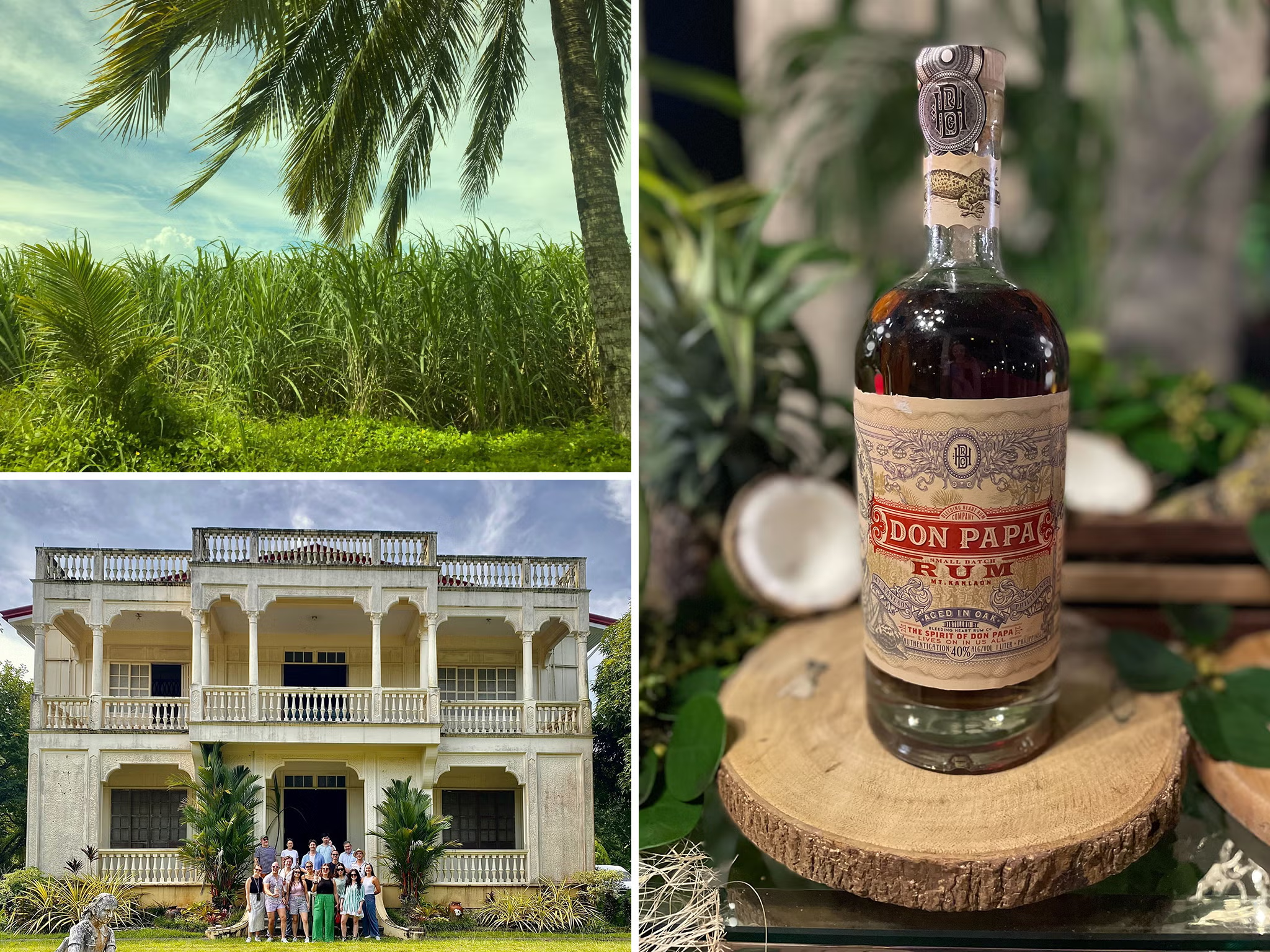
If you have been wandering down the spirits aisle for the last few years you have watched a masterclass in corporate gaslighting. The bottle is instantly familiar. It is heavy when you pick if off the shelf and it features that lush and overly curated Sugarlandia packaging. It looks like a Steampunk nightmare. It is Don Papa. If you get the chance take a moment to compare the current bottle on your local supermarket shelf to a relic from a few years ago or dig around on the internet like I did. You will notice something is missing.

The word Rum is gone.
This was not a style choice. It was a surrender to reality. Don Papa’s house of cards did not just collapse it was dismantled by a combination of EU regulatory pressure, laboratory science and a class action legal reckoning.
The Genesis: A Manufactured History
The Don Papa story is a classic in modern corporate bullshit It’s a journey that begins not with a distillery but with a marketing executive.
Stephen Carroll was a former director at Rémy Cointreau who founded the Bleeding Heart Rum Company in 2012. He did not build a distillery. He built a narrative. He identified the sugar rich island of Negros in the Philippines and branded it Sugarlandia. He hijacked the name of Dionisio Magbuela who was a genuine 19th century revolutionary to give an industrial product a freedom fighter soul. Worst of all this all worked.
For years the brand thrived on what I call “canister” marketing. By releasing over 40 collectible and artist commissioned tins, they banked on that if the shelf presence is loud enough, your average consumer won’t stop and ask why the liquid tastes like bubblegum and vanilla extract. They were selling a lifestyle accessory for those with more money than sense. They were not selling a spirit. They definitely were not selling a Craft or “Artisinal” rum.
The Industrial Truth: It Is Not Small Batch
Lets strip away the small batch fairy tale. Don Papa is produced at the Bago Distillery on Negros. Which sounds reasonably romantic but actually is far from it.
This is a massive industrial facility owned by the San Miguel Corporation. This is not an artisanal rum distillery. It is a high volume and multi purpose alcohol plant. Designed to output continuous multi column neutral spirit at huge scale. It has nothing to do with nuanced spirit making.
You’ll not find any 200 year old Wooden Stills here………
Bago Distillery is the beating heart of the Philippine industrial alcohol industry. It does not exist to serve the vanity of a single rum brand. It is a massive facility tasked with churning out millions of litres of neutral spirit.
It produces the world’s largest volume of gin through the Ginebra San Miguel range. It manufactures high volume brandy and vodka brands like Gran Matador and Antonov and Chinese herbal wines like Vino Kulafu.
When you drink Don Papa you are tasting a product born from the same industrial infrastructure that produces budget gin and mass market vodka. There is nothing magical going on here.

The Ageing Myth
Lets address the elephant in the room regarding age statements. Don Papa uses (or rather used) the blending process to explain away the inconsistency of their supply. This is a common tactic in the industrial rum world.
It is designed to act as a linguistic shield. True aging is a complex process.
When industrial brands claim 7 or 10 years they are usually just throwing old stock at a massive Vat of young and harsh column still spirit to claim an age that does not exist in the bottle. They hope and kind of know that the average customer won’t ask or even care.
There is no oversight for how much of that old spirit needs to be in the blend. You could have 99% young and raw spirit with a single drop of old rum added to the mix. They still call it a 7 or 10 year old product. It is a mockery of time.
It is a cynical way to inflate the price tag of a liquid that has not spent enough time in wood to justify the premium status they demand. In the sweltering tropical heat of the Philippines the angel’s share is 8 to 12% per year. If you truly aged a spirit for 10 years in the intense heat of Negros the barrel would be bone dry.
Which wouldn’t have been a bad thing.
The Laboratory Nightmare and the Hydrometer Revolution
Independent lab analysis of the Baroko expression revealed some ugly numbers:
- Added Sugar: 29 g/L
- Vanillin: 359 mg/L
- Glycerol: 2.4 g/L
Don Papa is dosing their liquid with nearly 150 times the natural vanillin of a standard rum. They are not letting the wood talk. You will not find any of the usual ageing flavours and aromas in a bottle of Don Papa.
The deep and dark colour which is marketed as a result of long ageing and volcanic soil is bolstered by E150a caramel colour. Not just a drop or two either this is about as subtle as a sledgehammer.
This is where simple tests the average consumer can do themselves at home come in.
For years I have banged on about using simple hydrometers to test spirits. It is a basic piece of equipment that measures density. When you drop it into a pure spirit it tells you exactly what is hiding in the bottle.
When you test a rum that claims to be natural and the hydrometer shows a high density that only additives can explain the game is up. These brands despise the hydrometer. They call it a blunt instrument. They come up with all kinds of nonsense to discredit. Some even going so far as to get their schills in the industry to write articles pointing out the flaws.
They claim it cannot account for solids or flavour profiles blah, blah, blah. They are talking out of their arse. Worst part is – they know they are lying and sadly so do some of those in the industry who keep up the deception, for favourable treatment.
It measures the truth. It shows exactly how much of your glass is liquid and how much is syrup. It doesn’t tell the full story but it has been shown time and time again that it is NEVER far from lab analysis when it is comes to density. The parts it can’t show or explain?
That is the part the producer should be revealing. The emphasis should not be shifted on to consumers and regulatory bodies to reveal the truth!
The Deconstruction: Tasting the Illusion

If you pour a glass of Don Papa and compare it to a legitimate and additive free rum from Barbados or Jamaica the difference is staggering. A genuine rum will behave like a 40% (and higher) alcoholic spirit. Not a Blue Ice Pop.
It has a beginning and a middle and an end. You can taste the spirit and the barrel and the terroir and the fermentation. Yes it burns a bit and tastes of booze. Its supposed to.
Don Papa has none of this. It never has. It has a flat and cloying overwhelming sweetness that hits the front of your tongue and stays there.
It is a blunt force trauma of vanillin. There is no evolution in the glass. It does not open up or show hidden complexity because there is nothing to hide. It is a static and manufactured experience. It is closer to a liqueur or a flavoured syrup than to the category of rum. If you are paying £40 or £50 pounds, for a bottle you are paying silly money really. You are not paying for a distiller’s time or craft.
It’s hideous and it should never have been able to have been called “rum”. The Whisky world would never have accepted this level of utter nonsense.
The Colonial Marketing Machine
There is a sinister undercurrent to the way these brands operate. They often rely on colonial tropes to sell their products. They make the rum sound exotic. Using the locations where they source their molasses. They turn historical figures into mascots. By stripping away the real history of the Philippines and replacing it with the whimsical nonsense of Sugarlandia they are effectively erasing the actual struggles and the actual culture of the people who live and work there. They are using a version of history that is palatable to a western consumer who wants a nice story to go along with their sweet drink. It is a sanitised and dishonest version of reality.
It’s insulting to the Phillipines. Sadly it is nothing new and nothing which appears to be going away.
Marketing particular by foreign owned distilleries in the Caribbean and further afield continues to be at best patronising.
The Regulatory Shell Game
Why does the EU regulation matter so much? It matters because it forces transparency onto a category that has lived in the shadows for far too long. By capping additives at 20g/L the EU finally drew a line in the sand. Don Papa’s failure to cross that line without a re-label is the ultimate confession. They chose to maintain their flavour profile over their category status.
It was never really about rum.
Don Papa chose to be a Spirit Drink because that is what they are. They retreated behind the label change to keep their sales figures intact. They bank on the fact that the average consumer is not a legal expert.
The Diageo Effect
When Diageo swallowed the brand in 2023 it was the final nail in the coffin of the scrappy underdog myth. Diageo does not buy brands that they intend to keep artisanal. They buy brands that they can scale. They buy assets that they can maximize for margin. By folding Don Papa into a global portfolio they have institutionalised the deceptive practices that built the brand. They have the resources to defend the lawsuits and the marketing budget to bury the negative press. They are essentially betting that the average consumer will never care about the difference between a real rum and a Premium Spirit Drink.
The Great Bottle Swap: A Timeline of Illusions

The strategy is calculated. The brand has executed a quiet and staggered pivot to ensure they stay on the shelf while dodging the regulatory noose.
- 2012: Don Papa launches in the Philippines while selling a small batch narrative.
- 2013-2020: The canister era begins. Over 40 collector tins distract consumers from the liquid. The brand builds an empire on lifestyle marketing. Limited editions and fancy bottles are all the range. Collectors bottles and glasses etc etc. Lovely Duty Free box sets.
- 2021: The EU tightens the noose with Regulation 2019/787. The rum label becomes a liability for high sugar expressions.
- 2021-2022: The Baroko pivot commences. The brand launches Baroko as a Spirit Drink to allow for higher sugar content while keeping the branding identical to the core range.
- 2023: Diageo acquires the brand for up to 437.5 million euros. The scrappy underdog is officially absorbed into the world’s largest spirits conglomerate.
- Present Day: A calculated and split portfolio now exists. If you want the sugar you get the Spirit Drink. If you want the label you get a reformulated rum that is dryer and even thinner.
It is a bait and switch performed in front of millions. It relies on the fact that most consumers will not check the fine print until after the money has changed hands.
Look for Don Papa 7 Year Old in a UK Supermarket nowadays. You’ll struggle, Baroko is front and centre. It’s an easy purchase. I’m not sure if even regular consumers will realise that its just the old version of the Don Papa flagship. I doubt they have that much nous. They won’t care as Baroko will still satisfy the blue bubblegum and Mr Whippy addiction………….
Final Thoughts: The Path Forward
The rise of the Rum Revelation has empowered consumers to look closer at what they are drinking. We are no longer living in an era where we must blindly accept the romantic stories printed on the back of a bottle. We have tools like hydrometers. We have lab reports. We have each other.
When you see a brand that prioritises marketing over transparency you have to ask yourself why. If the product was truly a premium and naturally aged spirit it would not need to hide behind a Spirit Drink label in the EU.
It would not need to dump massive quantities of artificial vanillin into the blend. It would stand on its own merits. We shouldn’t feel bad about saying something is shit just because some grown adults have the taste buds of toddlers.
You should stop buying liqueur at rum prices. Stop letting the marketing departments decide what you enjoy. The next time you walk into that shop skip the shiny tins. Look for producers who are proud to tell you exactly how they make their rum and where they make it and what they put in it. Do not be fooled by the Sugarlandia nonsense. Demand better from the industry and stop settling for Premium Spirit Drinks that have no business being called rum.
The truth is finally leaking out. The label changes are just the start. There is a difference between a master distiller and a flavour chemist. There is a difference between a heritage brand and a marketing project. Choose the former every single time. Your palate will thank you. Your wallet will thank you. Most importantly the real producers of the world who actually respect their craft will thank you.
